Farm Practices
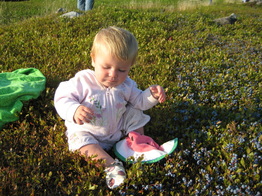 A young picker hard at work.
Wild blueberries are grown over a two year cycle. In the spring, after pruning half of the field by mowing or straw burning, we weed by hand pulling, clipping and scything. The low-bush plants set flower buds in the fall. These buds (hopefully protected from the winter by deep snow) bloom in May and are pollinated by wild, bumble, and honey bees in May. The field is literally a-buzz!
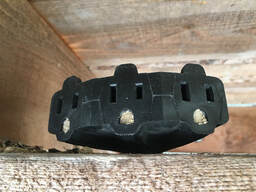
If you can cut out spraying pesticides, native Osmia bees will increase their populations. Even an old plug will do for a house!
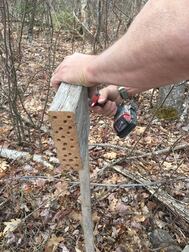
Time to make some more bee blocks and set them around the field.
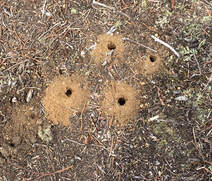
Soil-nesting bees seem to like well-drained soil facing south.
Beneficial insect and pollinator populations are increasing after 15 years of continuous organic farming practices.
Beneficial insect and pollinator populations are increasing after 15 years of continuous organic farming practices.
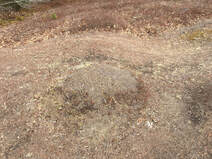
Allegheny ants will set up anywhere and build a mound to get their solar gain. They also provide beneficial insect policing within 50' of home, free of charge! Some colonies set up alongside a big stone using the solar warmth from the granite.
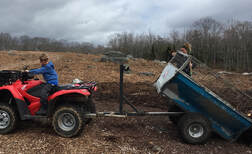
A deep and healthy soil is a good way to handle extremes of moisture and temperature. Wild blueberries do well in sour soil that resembles the forest floor. We've spread wood chips as a mulch over 2 acres, 5 to go!
We spray fermented worm juice as a foliar spray to stimulate the plant rather than pelletized NPK. This encourages the plants to seek nutients through the microrhyzal exchange. A healthy plant working a bit harder in a healthy soil gives the plants more root hairs to store water in case of drought.
We spray fermented worm juice as a foliar spray to stimulate the plant rather than pelletized NPK. This encourages the plants to seek nutients through the microrhyzal exchange. A healthy plant working a bit harder in a healthy soil gives the plants more root hairs to store water in case of drought.
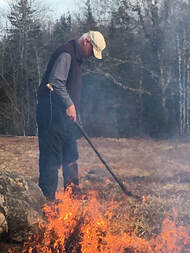 Pruning the Field with a burn.
The blueberries begin to ripen by the beginning of August and continue to ripen throughout the month. The ripe berries are raked by hand into field boxes and then run through an electric winnower to be sorted into pints, quarts and freezer boxes.
We sell half of our crop fresh directly from the farm, locally at farmer’s markets and grocery stores. We freeze the rest to sell year round and make blueberry jam.
We sell half of our crop fresh directly from the farm, locally at farmer’s markets and grocery stores. We freeze the rest to sell year round and make blueberry jam.
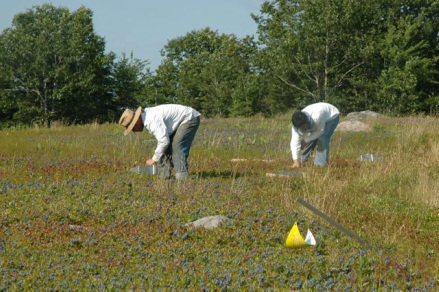
The berries are carefully harvested as the clones ripen.
|
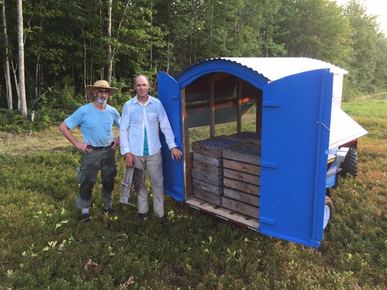
A full trailer of fresh berries on a dog day in August
|
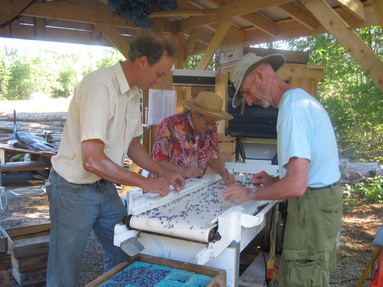
They are winnowed, sorted, and packed for fresh markets or frozen within hours.